How BMI should be calculated?
Body mass index (BMI) is calculated according to person’s weight and height (see tables on previous page). BMI equals a person’s weight in kilograms divided by height in meters squared. (BMI=kg/m2).
BMI is a reliable indicator of body fatness for people. Additionally, BMI is an inexpensive and easy-to- perform method of screening for weight categories that may lead to health problems.
Body mass index is calculated the same way for both adults and children. The calculation is based on the following formulas:
| Measurement Units | Formula and Calculation |
| Kilograms and meters (or centimeters) |
Formula: weight (kg) / [height (m)]2 With the metric system, the formula for BMI is weight in kilograms divided by height in meters squared. Since height is commonly measured in centimeters, divide height in centimeters by 100 to obtain height in meters. Example: Weight = 68 kg, Height = 165 cm (1.65 m) |
| Pounds and inches |
Formula: weight (lb) / [height (in)]2 x 703 Calculate BMI by dividing weight in pounds (lbs) by height in inches (in) squared and multiplying by a conversion factor of 703. Example: Weight = 150 lbs, Height = 5’5” (65″) |
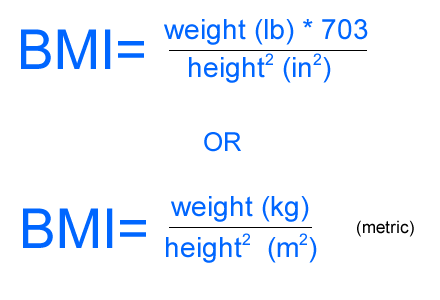
BMI formula
How Body Mass Index is interpreted?
Body mass index is interpreted using standard weight status categories that are the same for all ages and for both men and women.
The standard weight status categories associated with Body Mass Index ranges for adults are shown in the following table:
| BMI | Weight Status |
| Below 18.5 | Underweight |
| 18.5 – 24.9 | Normal |
| 25.0 – 29.9 | Overweight |
| 30.0 – 39.9 | Obese |
| 40.0 and more | Extreme Obesity |
The following should be considered:
- At the same Body Mass Index, women tend to have more body fat than men.
- At the same Body Mass Index, older people, on average, tend to have more body fat than younger adults.
- Highly trained athletes may have a high Body Mass Index because of increased muscularity rather than increased body fatness.
Check your weight and your Body Mass Index using standard BMI tables – see on next page
What are health consequences of overweight and obesity?

BMI
Overweight and obese individuals are at increased risk for many diseases and health conditions, including the following:
Hypertension
Dyslipidemia (for example, high LDL cholesterol, low HDL cholesterol, or high levels of triglycerides)
Type 2 diabetes
Coronary heart disease
Stroke
Gallbladder disease