Hundreds of medical and scientific laboratories and institutions are working on early detection of different types of cancer. While researchers are trying to find some modern complicated technological methods for early detection of cancerous cells, apparently our...
 Millions of people have cats and these cats already became family members. Few scientific studies show several advantages of having cat in the house: Cat owners are smarter – IQ scores of cat owners appeared higher (most probably because intellectual people prefer...
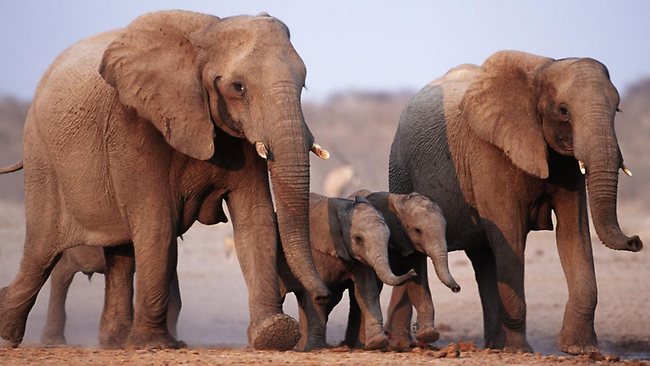 Elephants almost never get cancer. For decades scientists could not understand why elephants don’t have cancer – their remarkable resistance to cancer was a subject of many discussions and publications. In general, big animals like elephants live longer and their...
 According to medical statistics, breast cancer affects one in eight women during their lives. Breast cancer kills more women than any cancer except lung cancer. Nobody knows why some women get breast cancer. Scientists discovered several risk factors but not all women...
 It is well known that the main risk factors for breast cancer are being female and being older (commonly in menopause). It means just being a woman is the biggest risk factor for developing breast cancer. Breast cancer is the second common cancer among women (first is...
 One in eight women will develop breast cancer in their lifetime. Breast cancer is the second most diagnosed cancer in women (first is skin cancer). Average five-year survival rate is more than 90% for breast cancers detected early thanks to modern screening and...
 During last decades the stress is becoming a “normal” part of women life – career development, home, children, professional activities, complicated relations, family responsibilities. Generations of modern women experience growing levels of stress due to trying to...
 Tomosynthesis (so called “Digital Tomosynthesis” or “Digital Breast Tomosynthesis” or “DBT”) is a newly developed improved type of mammography (3-D) – the method for performing high-resolution limited-angle tomography at mammographic dose levels. It is a new dimension...
 First of all we should clarify who can be considered overweight and who is obese. The main tool to check it is Body Mass Index (BMI) – see in following page. Generally speaking, the BMI over 25 should be considered as overweight and/or obesity. Several studies...
 Breast cancer is the most common type of cancer in women. The most significant risk factors for breast cancer development are gender (being a woman) and age (growing older). Women’s risk of breast cancer almost doubles if she has a first-degree relative (mother,...
 While it’s no secret that consumption of too much added sugar is not healthy, millions of women are still addicted to sugar (without knowing or thinking about life threatening risks). Sugar can lead to dangerous diseases. World Health Organization guidelines...
 Breast cancer is the most common type of cancer in women – it affects one in eight women during their lives. Breast cancer is the most common invasive cancer in females worldwide. About 80% get breast cancer after 50. Breast cancer rates are much higher in developed...
 Medical professionals noted that breast cancer is increasing globally for unknown reasons. Surprisingly the statistics show that women living in poor countries where there is less electric lighting, less access to computers and modern technologies are less likely to...
 Unfortunately many women suffer from breast cancer, which is a malignant tumor. During breast cancer, group of cancerous cells grow in the breast (usually in one breast) and into other areas around breasts. Scientists mentioned that the frequency of breast cancer is...
 Before speaking about cervical cancer, it is very important to clarify what is cervix and what is cancer, in general. What is cervix? The cervix is part of a woman’s reproductive system. It’s in the pelvis. The cervix is the lower, narrow part of the...