What a wonderful time we can spend at the seaside! Isn’t it lovely enjoying warmth and light of the sun after long cold winter! But too much sun exposure can significantly damage our skin and even provoke skin diseases (sometimes even dangerous). Scientists demonstrated that heat from sun usually dries out areas of unprotected skin and depletes the skin’s supply of natural lubricating oils. At the same time, sun’s ultraviolet radiation could cause skin burning and long-term changes in the skin’s structure.
It is well known that prolonged sun exposure can damage the skin and can trigger premature skin aging. There is even special terminology called “photoaging” which refers to the skin damages done from long sun exposure – cumulative effect of ultraviolet radiation during lifetime. Many skin changes which we experience during our life in most cases were triggered by sun exposure or were accelerated by sun exposure.
Photoaging means long-term changes in the skin’s collagen which is the main important structural skin protein – changes triggered by long-term sun exposure. Actually photoaging means premature skin aging because of sun exposure which includes skin wrinkles and so called “actinic purpura” (bleeding from fragile blood vessels beneath the skin surface).

Skin and Sun Exposure
Sun exposure is risky for women with different types of skin and with different colors of skin. But sun exposure could be more dangerous for women with fair skin who could burn easily and who should be included in the risk group for skin aging. So, when we speak about sun exposure, skin type is very important. It is well known that if you have fair skin and light eyes, you should be very careful with sun exposure because you are at greater risk of sun-related skin damage and skin cancers. Women with fair skin and light eyes should afraid of sun’s ultraviolet radiation because their skin contains less of a dark pigment called “melanin” which helps to protect the skin from the effects of UV radiation.
Smoking women also should be included in the risk group because scientists discovered that smoking speeds up the photoaging processes.
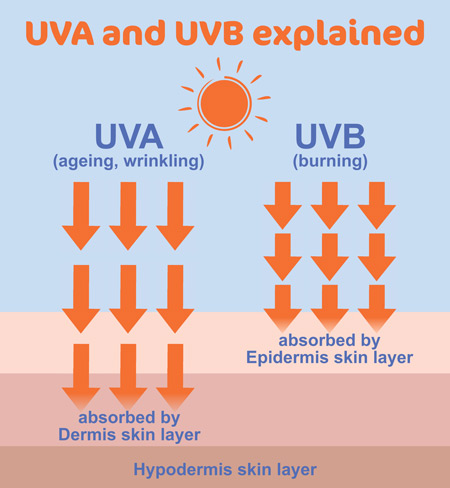
Sun’s ultraviolet radiation
How exactly sun’s ultraviolet radiation can damage our skin? What are main skin damages triggered by sun’s ultraviolet radiation? Here is the list of most common skin damages observed after extensive sun exposure:
• Skin dryness due to lost moisture and essential oils,
• Skin wrinkles (fine or deep),
• Unusual skin pigmentations,
• Change of skin texture (rough skin),
• Broken or dilated skin capillaries,
• Sunburn (skin redness, fluid-filled bumps and/or blisters),
• Areas of so called “actinic keratosis” – small, red or brown or yellow, rough spots on the skin.
It should be mentioned that over our lifetime the combination of long sun’s ultraviolet radiations (especially with unprotected skin) and repeated episodes of sunburn could increase the risk of malignant melanoma and other forms of skin cancer.
Sun’s ultraviolet radiation can damage not only our skin but also eyes and immune system. Some skin damages could be visible immediately such as skin redness, sunburn, dilated skin capillaries but other influences of sun exposure could be discovered later such as immune system suppression or skin cancer. Long-term skin damages after intensive sun’s ultraviolet radiation usually build up over time.